Discovering the Different Pencil Lead Types
Many of us remember being told to use only a #2 pencil for standardized tests and Scantron exams. We were warned that using a different pencil could prevent our answers from being properly recorded, potentially invalidating our test results. At the time, this may have seemed confusing. After all, we were clearly writing our answers down, so how could they not appear? Yet few of us were ever told why the #2 pencil was so important or what makes it different from other pencil types.
The answer lies in the pencil’s lead grade. Pencil lead is available in a variety of hardness levels, and these grades determine how dark a pencil writes and how easily its marks can be read by scanning machines.
Throughout this blog, we’ll explore the different pencil lead grading systems, including HB, H, and B classifications and the numbered scales used to identify them. By understanding these distinctions, you’ll gain insight into which pencils are best suited for writing, sketching, and technical drawing, and discover why the #2 pencil has become the standard choice in schools and testing environments.
By the end of this post, you’ll understand the differences between pencil lead types and discover why the #2 pencil earned its place as a classroom staple.
The Pencil Lead Grading Scale Explained
 Pencil lead is made from a mixture of graphite and clay. The ratio of these materials determines the lead’s hardness and the darkness of the marks it produces. As a result, pencils are assigned grades that help identify their writing and drawing characteristics. This grading system is known as the pencil lead grading scale.
Pencil grades can be expressed using either the HB scale or the numeric scale. Although both systems measure the same characteristics, they use different labels to identify a pencil’s hardness and darkness.
Often, the numeric scale is associated with everyday writing in schools and offices, while the HB scale is commonly used by artists, architects, and engineers because it provides a broader range of hardness and tonal options.
Some of the most common grade markings found on pencils include:
- European HB scale: H, B, F, HB, and numbered variations such as 2H and 2B
- United States numeric scale: #2, #3, and #4
The HB scale is used to classify pencils based on the hardness of the lead and the darkness of the marks it produces. H-grade pencils are harder and create lighter, finer lines, whereas B-grade pencils are softer and produce darker, bolder marks. HB represents a balance between hardness and darkness, making it a versatile choice for everyday use. F pencils are firm and designed to retain a fine point.
Numbers can also be combined with the HB scale to indicate increasing levels of hardness or darkness. For example, a 2H pencil is harder and produces lighter marks than an H pencil, while a 2B pencil is softer and creates darker marks than a B pencil. In general, higher H numbers indicate greater hardness, while higher B numbers indicate greater softness and darker marks.
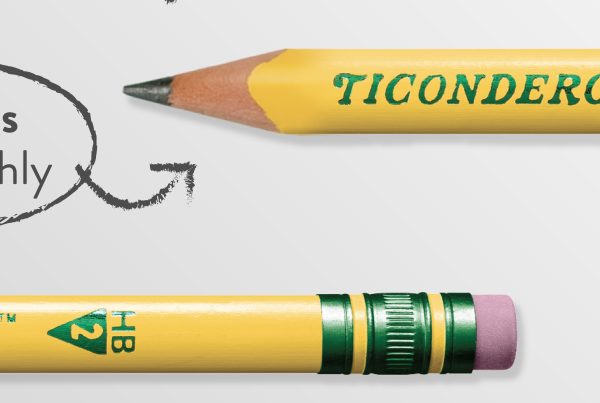
The numeric scale provides similar information using numbers. While grading systems vary slightly among manufacturers, a #2 pencil is generally equivalent to HB, and a #3 pencil is roughly comparable to H. Since both systems measure the same characteristics, manufacturers often print both grades on the same pencil such as “#2 HB,” for additional clarity.
Common Pencil Grades and Their Uses
The following table compares the most common pencil grades and their typical uses:
| Pencil Type & US Numeric Scale | HB Equivalent | Darkness | Hardness | Common Use |
| #1 Pencil | B | Dark | Soft | Bold writing, sketching, and shading |
| #2 Pencil | HB | Medium darkness | Medium | General writing, note-taking, and exams |
| #2.5 Pencil | F | Medium-light | Medium-hard | Fine line writing and light sketching |
| #3 Pencil | H | Slightly lighter | Hard | Technical drawing, drafting, and fine-line work |
Why #2 Pencils Are Preferred in Schools
The #2 pencil offers a balance between hardness and darkness, making it well suited for everyday writing and standardized testing. Its graphite core is soft enough to produce dark, easily readable marks, yet hard enough to reduce smudging and maintain a durable point during use. Since the marks made by a #2 pencil can be detected easily by scanning machines, it has long been the standard choice for standardized tests and classroom assessments. This combination of readability, durability, and reliability helps ensure that students’ responses can be accurately recorded and graded.
Choose the Right Pencil Lead for Your Writing Needs
Understanding pencil lead grades makes it easier to choose the right pencil for any task. From everyday writing with a #2 pencil to detailed technical drawings with harder grades and expressive sketches with softer grades, each pencil type offers unique benefits that help users achieve their desired results.
Shop a wide variety of pencil lead types at W.B. Mason!






References
Difference Between Descriptive Analysis and Comparisons. Difference Between HB and F Pencil. (https://www.differencebetween.info/difference-between-hb-and-f-pencil) Accessed June 18, 2026.
TheTechyLife. Unraveling The Mystery: Why Do Schools Use Number 2 Pencils? (https://thetechylife.com/why-do-schools-use-number-2-pencils/) Accessed June 18, 2026.
Pen Vibe. Graphite Pencil Scale Explained: Grades, Uses & Hardness. (https://penvibe.com/the-graphite-pencil-scale-ultimate-guide/) Accessed June 18, 2026.