The Role Safety Signs Play in Commercial Spaces
Safety signs play an important role in commercial spaces by communicating hazards, safety procedures, emergency information, and workplace requirements. They help reduce the risk of accidents, promote safety awareness, and ensure employees, customers, and visitors remain informed about potential dangers and safe practices.
Below, we’ll walk through the different types of safety signs and their meanings to help your business create a safer workplace and support compliance with applicable safety regulations.
Safety Sign Meanings and Types:
Directional Signs
Directional signs help guide people through a facility, identify designated routes and locations, reducing confusion in complex environments, and supporting emergency preparedness.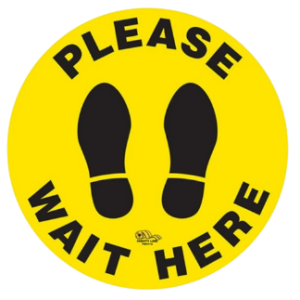
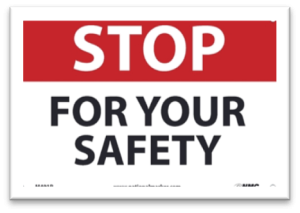
Directional signs:
Personal Protective Equipment Signs
Personal protective equipment signs indicate that specific protective equipment must be worn before entering an area to help protect employees, visitors, and contractors and support compliance with workplace safety regulations, such as those established by OSHA. Since different work environments present different hazards, PPE signs identify the equipment required for each location.
- Hard Hat Required Signs: Hard hats or electrical safety helmets are required to help prevent head injuries caused by falling objects or electrical hazards.
- Eyes and Face Protection Signs: Safety goggles or face shields are required to protect the eyes and face from debris, chemicals, sparks, dust, or other hazardous materials.
- Hearing Protection Signs: Earmuffs or earplugs are required to reduce the risk of hearing damage in high-noise environments.
- Safety Shoes Required Signs: Safety shoes or boots are required to protect feet from impacts, punctures, crushing hazards, and slips.
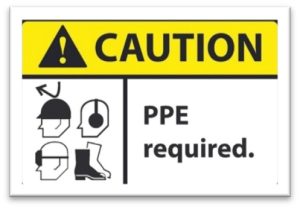
Personal Protective Equipment Signs:
Restricted and Prohibited Signs
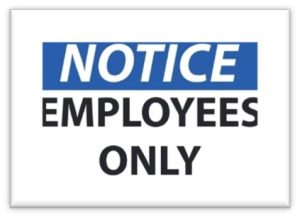
Restricted and prohibited signs are used to prevent individuals from entering areas that are unsafe or not authorized for access unless the are authorized and trained on applicable safety procedures. These signs are also used to communicate actions, behaviors, or items that are prohibited in specific locations or situations.
For example, “Closed for Cleaning” signs help prevent customers from entering restrooms where wet floors or cleaning chemicals may pose a hazard. Similarly, “Private Property” signs restrict access to areas that are not open to the public or require specific authorization to enter.
Restricted and Prohibited Signs: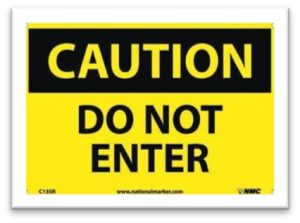
- Do Not Enter Signs
- Notice – Employees Only Signs
- No Firearms Allowed on Premises Signs
- Restricted Area, No Unauthorized Personnel Beyond This Point Signs
Warning and Caution Signs
Warning and caution signs are designed to visually alert individuals to potential hazards, reduce the risk of injury, and communicate important safety information about an area. These signs help people become more aware of their surroundings and encourage them to proceed with caution when necessary.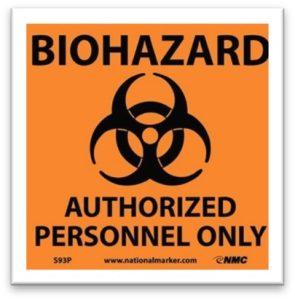
Warning and Caution Signs:
- Biohazard Signs: Alert individuals to the presence of biological hazards or potentially dangerous materials, helping to reduce the risk of exposure.
- High Voltage Signs: Warn individuals of dangerous electrical hazards to help prevent electrocution and other serious injuries.
- Watch For Forklift Traffic Signs: Alert pedestrians to the presence of moving forklifts and other industrial vehicles, helping keep pathways clear and reducing the risk of accidents.
- Watch Your Step Signs: Inform individuals of uneven surfaces, changes in elevation, or potential trip hazards to help prevent slips, trips, and falls.
- Gates Open and Close Automatically Signs: Notify individuals that gates operate automatically, allowing them to approach with caution and helping prevent collisions, entrapment, or obstruction of the gate’s movement.
Designated Area Signs
Designated area signs serve as visual markers that identify specific locations within a facility, helping people quickly identify the purpose of the area and improving overall organization and operational efficiency.
These signs are especially valuable for areas that need to be quickly and easily located, such as first aid stations, testing centers, designated smoking areas, and emergency eyewash stations. They also help ensure that these spaces remain accessible and available when needed by indicating their intended use.
For example, “Curbside Pick-up Here” signs designate parking spaces reserved for customers collecting orders. By clearly marking these spaces, businesses can keep them available for curbside pick-up, allowing employees to quickly locate customers and efficiently deliver orders.
Designated Area Signs: 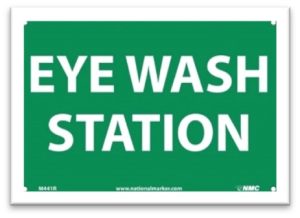
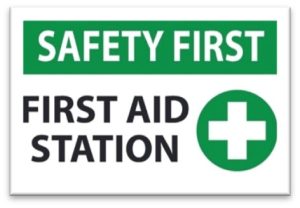
- Designated Smoking Area Signs
- First Aid Station Signs
- Notice – Hand Sanitizer Station Signs
- Curbside Pick-Up Here Signs
Exit Signs
Exit signs provide clear visual guidance to individuals about where to leave a building, during both routine departures and emergency evacuations. They help identify designated exit routes, indicate doors that are not exits, and distinguish exit-only doors where reentry is not permitted.
These signs also communicate which exits are reserved for emergency use only, helping ensure that exit pathways remain unobstructed and accessible when needed. By marking exits and exit routes, these signs support occupant safety, improve navigation, and assist businesses in complying with applicable safety and building regulations.
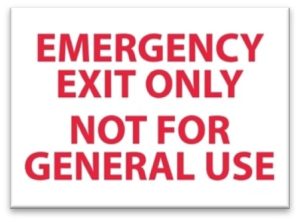 Exit Signs: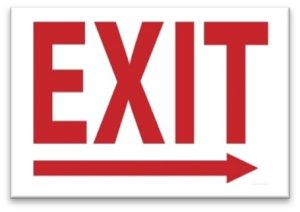
- Emergency Exit Not For General Use Signs
- Exit Signs
- Exit Only – Thank You Signs
- Not An Exit Signs
- Exit Right Arrow Signs
- Exit Left Arrow Signs
Fire Safety Signs
Fire safety signs are designed to provide important information about fire prevention, emergency procedures, and the location of fire safety equipment. These safety signs help individuals identify resources such as fire extinguishers, fire alarms, and emergency exits, while also communicating critical instructions, such as not using elevators during a fire and notifying emergency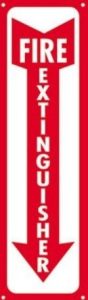 services when necessary.
Flammable material signs are another important category of fire signage. These signs alert individuals to the presence of flammable substances and encourage extra caution when working nearby. By clearly identifying fire hazards, they help reduce the risk of ignition, fire-related accidents, and property damage.
Fire Safety Signs:
- Fire Department Connection Signs
- Fire Extinguisher Signs
- Flammable Materials Signs
- In Case of Fire Do Not Use Elevator Use Stairwell Signs
No Smoking Signs
No smoking signs are essential for preventing smoking in commercial facilities and other designated smoke-free areas. These signs help protect employees, visitors, and customers from exposure to secondhand smoke, particularly individuals who may be more sensitive to its effects, such as children, people with asthma, and those with other respiratory or health conditions.
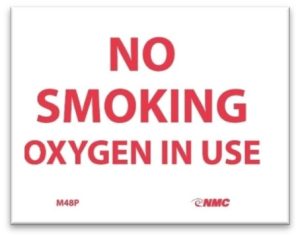
No Smoking Oxygen in Use signs are especially important in environments where supplemental oxygen is stored, administered, or present in elevated concentrations. These signs help facilities comply with applicable federal, state, and local safety regulations while alerting individuals to the increased fire risk associated with oxygen-rich environments. Since oxygen can supports combustion, causing fires to spread more rapidly, it is critical to keep smoking materials, open flames, sparks, and other ignition sources away from these areas.
 No Smoking Signs:
- No Smoking Signs
- No Smoking Oxygen In Use Signs
- No Smoking Within 50 Feet Signs
- Propane No Smoking No Open Flame Signs
- Flammable Material No Smoking or Open Flames Signs
- No Smoking or Open Flames Within 50 Feet Signs
Safety Compliance Signs
Safety compliance signs are used to promote adherence to workplace safety procedures, reduce the spread of germs and illnesses, and help prevent accidents and injuries. These safety signs provide clear instructions and reminders that encourage safe behavior and support compliance with organizational policies and safety requirements.
Common examples include temperature check signs, hand hygiene signs, and instructional safety notices that communicate workplace requirements.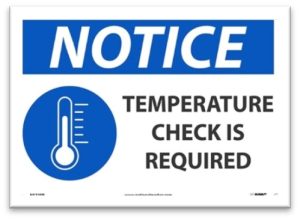
Safety Compliance Signs:
- Safety First, Playground and Equipment Provided Here Signs
- Temperature Check Is Required Signs
- COVID-19 Protect Yourself Signs
Security and Surveillance Signs
Security and surveillance signs help inform individuals that video or audio monitoring is taking place or may be taking place in certain areas. These signs support compliance with applicable laws and regulations by providing notice of surveillance and helping individuals understand that monitoring may occur within the area.
In addition to promoting transparency, security and surveillance signs can serve as a deterrent to theft, vandalism, trespassing, and other unauthorized activities by notifying individuals that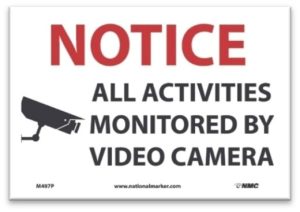 their actions may be recorded. To ensure visibility and awareness, these signs are typically placed at entrances, exits, and other highly visible, eye-level locations throughout a facility.
Security and Surveillance Signs:
Wet Floor Signs
Wet floor signs are among the most commonly used workplace safety signs in commercial spaces used to alert individuals to potentially slippery surfaces and help prevent slips, trips, and falls. By providing a clear visual warning, these signs encourage people to use caution when walking through an area and help reduce the risk of injury. 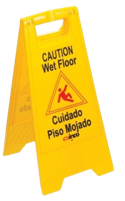
Wet floor signs are typically placed after a floor has been mopped, cleaned, or exposed to spills, leaks, or other moisture. These safety signs notify individuals of the hazards so they can proceed carefully or choose an alternative route until the area is safe for normal use.
Wet Floor Signs:
- Caution Signs
- Caution Wet Floor Signs
- Caution Wet Floor – Cuidado Piso Mojado Signs
- Slippery When Wet Signs
Equip Commercial Spaces with Adequate Safety Signs
Now that you understand the different types and meanings of safety signs, you can help increase awareness of important facility and safety information. Properly selected and strategically placed safety signs can help prevent injuries, reduce the spread of illness, support compliance with safety regulations, and improve navigation during emergencies. By informing individuals of hazards, instructions, and designated areas, safety signs contribute to a safer and more organized environment for everyone.