Taking a Closer Look at Pen Types
Although pens come in a variety of shapes, ink types, colors, and styles, many still assume they all perform the same. While every pen is designed for writing, each type is crafted to meet specific needs and preferences. Understanding these differences can help you choose the pen that best suits your writing style. Two of the most commonly used options are ballpoint and rollerball pens. Since these pens share a similar design, it’s important to understand what sets them apart.
In this post, we’ll explore the key differences between ballpoint and rollerball pens, featuring Uni-ball.
What is a Ballpoint Pen?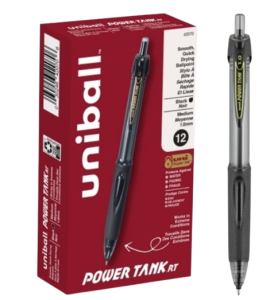
A ballpoint pen is a writing instrument that uses a small, rotating ball at the tip of the pen’s barrel to dispense ink onto the page. This design allows for smooth, reliable, and controlled writing. The ink used in ballpoint pens is typically oil-based, which gives it both durability and quick-drying properties.
Oil-based ink has a thicker, more viscous consistency, allowing it to flow steadily and dry quickly, leaving sharp, precise marks on paper. This fast-drying feature helps prevent smudges and smears, making ballpoint pens especially suitable for left-handed writers whose hands naturally pass over freshly written ink.
Thanks to its smudge-resistant ink, Uni-ball ballpoint pens are ideal for bullet journaling, planning, and writing on cards, checks, or charts. Most ballpoint pens also feature a textured grip, providing extra comfort and control during extended writing sessions.
What is a Rollerball Pen?
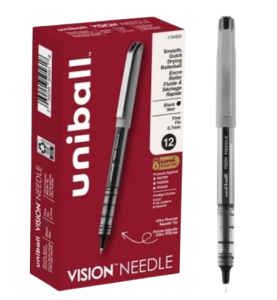 A rollerball pen is a writing instrument that uses a small rotating ball, similar to a ballpoint pen, to dispense ink onto paper. Unlike ballpoint pens, rollerball pens use water-based or gel ink, which produces bolder, darker, and smoother lines.
These ink types create a more fluid writing experience. Liquid ink is thinner and glides easily across the page, requiring less pressure from the writer and helping reduce hand fatigue during extended use. Gel ink, by contrast, is slightly thicker and offers more precise, controlled lines, though it may require slightly more pressure when writing.
The ink used in Uniball rollerball pens is designed to be fade-proof, as well as water and fraud resistant, making it a reliable choice for important documents. Overall, rollerball pens combine sleek design with high performance, making them suitable for a wide range of writing needs.
What is the Difference Between Rollerball vs. Ballpoint Pens?
The main differences between rollerball and ballpoint pens lies within their ink types, and how they produce text on a page. As previously discussed, ballpoint pens consist of an oil-based ink, while rollerball pens contain either a water-based or gel ink. Rollerball pens are ideal for bold, smooth writing, while ballpoint pens are designed for lighter and more controlled writing.
Each pen type offers unique features that may suit different writing styles and preferences. Below, we have created a side-by-side comparison of the types of pens to help you get a better understanding of which is the right fit for you:

| Uniball Ballpoint Pens | Uniball Rollerball Pens |
|
Oil-Based Ink Longer shelf life Ink dries quickly on paper Ink flows slower, resulting in a longer pen lifespan Smudge-resistant Ink color options are limited Does not bleed through paper Requires more pressure when writing Ideal for: Filling out charts, forms, and documents, note taking, on-the-go writing, long writing sessions |
Water-Based or Gel Ink Produces vivid or bold lines Provides consistent ink flow with minimal skipping Water and fraud-resistant Ink available in a wide range of color options Bleeds through paper Requires less pressure when writing Ideal for: Signatures, notes, lists, and record keeping |
Rollerball vs. Ballpoint Pens: Which Will You Choose?
Understanding the differences between ballpoint and rollerball pens can help you make an informed decision based on your writing needs. Choosing the right pen can ensure smoother writing sessions, help keep important documents clean and free from bleeding, and reduce smudging based on your writing style and hand preference. By considering these factors, you can select the pen that best supports your everyday writing tasks.